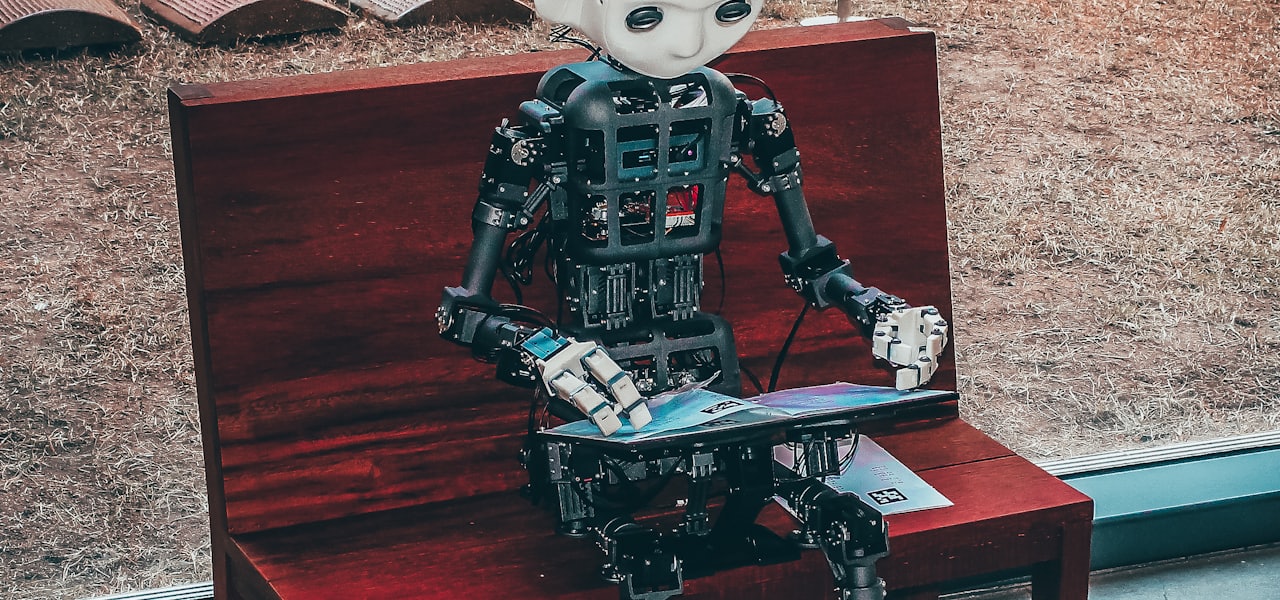
In computer science and mathematical logic, a proof assistant or interactive theorem prover is a software tool to assist with the development of formal proofs by human–machine collaboration. This involves some sort of interactive proof editor, or other interface, with which a human can guide the search for proofs, the details of which are stored in, and some steps provided by, a computer. A recent effort within this field is making these tools use artificial intelligence to automate the formalization of ordinary mathematics. == Automated proof checking == Automated proof checking is the process of using software for checking proofs for correctness. It is one of the most developed fields in automated reasoning. Automated proof checking differs from automated theorem proving in that automated proof checking simply mechanically checks the formal workings of an existing proof, instead of trying to develop new proofs or theorems itself. Because of this, the task of automated proof verification is much simpler than that of automated theorem proving, allowing automated proof checking software to be much simpler than automated theorem proving software. Because of this small size, some automated proof checking systems can have less than a thousand lines of core code, and are thus themselves amenable to both hand-checking and automated software verification. The Mizar system, HOL Light, and Metamath are examples of automated proof checking systems. Automated proof checking can be done either as a batch operation, or interactively, as part of an interactive theorem proving system. == History == Automath, which was developed by Nicolaas Govert de Bruijn starting in 1967, is often considered the first proof checker and the first system to utilize the Curry–Howard correspondence between programs and proofs. Automath was used by L.S. van Benthem Jutting in 1977 to formalize Landau's Foundations of Analysis, which was the first formalization of the real numbers. In 1973, Robert Boyer and J Moore published Proving Theorems about LISP Functions which aimed to verify programs, not mathematics. Their theorem prover is now known as ACL2. In the 1970s, Edinburgh LCF introduced the idea of using a functional programming language as the metalanguage for a theorem prover, and led to the HOL family of proof assistants. The 1990s saw the rise of Rocq, (then known as Coq), which has been used for many large-scale formalization projects. Since the late 2010s, Lean, a proof assistant strongly influenced by Rocq, has become another popular choice, especially for formalizing mathematics. == System comparison == ACL2 – a programming language, a first-order logical theory, and a theorem prover (with both interactive and automatic modes) in the Boyer–Moore tradition. HOL theorem provers – A family of tools ultimately derived from the LCF theorem prover. In these systems, the logical core is a library of their programming language. Theorems represent new elements of the language and can only be introduced via "strategies" which guarantee logical correctness. Strategy composition gives users the ability to produce significant proofs with relatively few interactions with the system. Members of the family include: HOL4 – The "primary descendant", still under active development. Support for both Moscow ML and Poly/ML. Has a BSD-style license. HOL Light – A thriving "minimalist fork". OCaml based. ProofPower – Went proprietary, then returned to open source. Based on Standard ML. IMPS, An Interactive Mathematical Proof System. Isabelle is an interactive theorem prover where other systems can be encoded. Isabelle/HOL is its most popular instance, whose foundation is close to that of the HOL prover. Other instances include Isabelle/ZF and Isabelle/FOL. The main code-base is BSD-licensed, but the Isabelle distribution bundles many add-on tools with different licenses. Jape – Java based. Lean is both an interactive theorem prover and a functional, dependently-typed programming language. It is based on the calculus of inductive constructions with non-cumulative universes. Since version 4 (released in 2023), it is self-hosting. It can be used to formalise mathematics (and has a large, coherent library for formal mathematics), but also for software and hardware verification. LEGO Matita – A light system based on the calculus of inductive constructions. MINLOG – A proof assistant based on first-order minimal logic. Mizar – A proof assistant based on first-order logic, in a natural deduction style, and Tarski–Grothendieck set theory. PhoX – A proof assistant based on higher-order logic which is eXtensible. Prototype Verification System (PVS) – a proof language and system based on higher-order logic. Rocq (formerly named Coq) – A popular interactive theorem prover based on the calculus of inductive constructions. Theorem Proving System (TPS) and ETPS – Interactive theorem provers also based on simply typed lambda calculus, but based on an independent formulation of the logical theory and independent implementation. == User interfaces == A commonly used front-end for proof assistants was the Emacs-based Proof General, developed at the University of Edinburgh. Nowadays, many provers include their own editor. Rocq includes RocqIDE, which is based on OCaml/Gtk. Isabelle includes Isabelle/jEdit, which is based on jEdit and the Isabelle/Scala infrastructure for document-oriented proof processing. More recently, Visual Studio Code extensions have been developed for Rocq, Isabelle by Makarius Wenzel, and for Lean 4 by the leanprover developers. == Formalization extent == Freek Wiedijk has been keeping a ranking of proof assistants by the amount of formalized theorems out of a list of 100 well-known theorems. As of September 2025, only six systems have formalized proofs of more than 70% of the theorems, namely Isabelle, HOL Light, Lean, Rocq, Metamath and Mizar. == Notable formalized proofs == The following is a list of notable proofs that have been formalized within proof assistants.
Plug computer
A plug computer is a small-form-factor computer whose chassis contains the AC power plug, and thus plugs directly into the wall. Alternatively, the computer may resemble an AC adapter or a similarly small device. Plug computers are often configured for use in the home or office as compact computer. == Description == Plug computers consist of a high-performance, low-power system-on-a-chip processor, with several I/O hardware ports (USB ports, Ethernet connectors, etc.). Most versions do not have provisions for connecting a display and are best suited to running media servers, back-up services, or file sharing and remote access functions; thus acting as a bridge between in-home protocols (such as Digital Living Network Alliance (DLNA) and Server Message Block (SMB)) and cloud-based services. There are, however, plug computer offerings that have analog VGA monitor and/or HDMI connectors, which, along with multiple USB ports, permit the use of a display, keyboard, and mouse, thus making them full-fledged, low-power alternatives to desktop and laptop computers. They typically run any of a number of Linux distributions. Plug computers typically consume little power and are inexpensive. == History == A number of other devices of this type began to appear at the 2009 Consumer Electronics Show. On January 6, 2009 CTERA Networks launched a device called CloudPlug that provides online backup at local disk speeds and overlays a file sharing service. The device also transforms any external USB hard drive into a network-attached storage device. On January 7, 2009, Cloud Engines unveiled the Pogoplug network access server. On January 8, 2009, Axentra announced availability of their HipServ platform. On February 23, 2009, Marvell Technology Group announced its plans to build a mini-industry around plug computers. On August 19, 2009, CodeLathe announced availability of their TonidoPlug network access server. On November 13, 2009 QuadAxis launched its plug computing device product line and development platform, featuring the QuadPlug and QuadPC and running QuadMix, a modified Linux. On January 5, 2010, Iomega announced their iConnect network access server. On January 7, 2010 Pbxnsip launched its plug computing device the sipJack running pbxnsip: an IP Communications platform.
Batch normalization
In artificial neural networks, batch normalization (also known as batch norm) is a normalization technique used to make training faster and more stable by adjusting the inputs to each layer—re-centering them around zero and re-scaling them to a standard size. It was introduced by Sergey Ioffe and Christian Szegedy in 2015. Experts still debate why batch normalization works so well. It was initially thought to tackle internal covariate shift, a problem where parameter initialization and changes in the distribution of the inputs of each layer affect the learning rate of the network. However, newer research suggests it doesn’t fix this shift but instead smooths the objective function—a mathematical guide the network follows to improve—enhancing performance. In very deep networks, batch normalization can initially cause a severe gradient explosion—where updates to the network grow uncontrollably large—but this is managed with shortcuts called skip connections in residual networks. Another theory is that batch normalization adjusts data by handling its size and path separately, speeding up training. == Internal covariate shift == Each layer in a neural network has inputs that follow a specific distribution, which shifts during training due to two main factors: the random starting values of the network’s settings (parameter initialization) and the natural variation in the input data. This shifting pattern affecting the inputs to the network’s inner layers is called internal covariate shift. While a strict definition isn’t fully agreed upon, experiments show that it involves changes in the means and variances of these inputs during training. Batch normalization was first developed to address internal covariate shift. During training, as the parameters of preceding layers adjust, the distribution of inputs to the current layer changes accordingly, such that the current layer needs to constantly readjust to new distributions. This issue is particularly severe in deep networks, because small changes in shallower hidden layers will be amplified as they propagate within the network, resulting in significant shift in deeper hidden layers. Batch normalization was proposed to reduced these unwanted shifts to speed up training and produce more reliable models. Beyond possibly tackling internal covariate shift, batch normalization offers several additional advantages. It allows the network to use a higher learning rate—a setting that controls how quickly the network learns—without causing problems like vanishing or exploding gradients, where updates become too small or too large. It also appears to have a regularizing effect, improving the network’s ability to generalize to new data, reducing the need for dropout, a technique used to prevent overfitting (when a model learns the training data too well and fails on new data). Additionally, networks using batch normalization are less sensitive to the choice of starting settings or learning rates, making them more robust and adaptable. == Procedures == === Transformation === In a neural network, batch normalization is achieved through a normalization step that fixes the means and variances of each layer's inputs. Ideally, the normalization would be conducted over the entire training set, but to use this step jointly with stochastic optimization methods, it is impractical to use the global information. Thus, normalization is restrained to each mini-batch in the training process. Let us use B to denote a mini-batch of size m of the entire training set. The empirical mean and variance of B could thus be denoted as μ B = 1 m ∑ i = 1 m x i {\displaystyle \mu _{B}={\frac {1}{m}}\sum _{i=1}^{m}x_{i}} and σ B 2 = 1 m ∑ i = 1 m ( x i − μ B ) 2 {\displaystyle \sigma _{B}^{2}={\frac {1}{m}}\sum _{i=1}^{m}(x_{i}-\mu _{B})^{2}} . For a layer of the network with d-dimensional input, x = ( x ( 1 ) , . . . , x ( d ) ) {\displaystyle x=(x^{(1)},...,x^{(d)})} , each dimension of its input is then normalized (i.e. re-centered and re-scaled) separately, x ^ i ( k ) = x i ( k ) − μ B ( k ) ( σ B ( k ) ) 2 + ϵ {\displaystyle {\hat {x}}_{i}^{(k)}={\frac {x_{i}^{(k)}-\mu _{B}^{(k)}}{\sqrt {\left(\sigma _{B}^{(k)}\right)^{2}+\epsilon }}}} , where k ∈ [ 1 , d ] {\displaystyle k\in [1,d]} and i ∈ [ 1 , m ] {\displaystyle i\in [1,m]} ; μ B ( k ) {\displaystyle \mu _{B}^{(k)}} and σ B ( k ) {\displaystyle \sigma _{B}^{(k)}} are the per-dimension mean and standard deviation, respectively. ϵ {\displaystyle \epsilon } is added in the denominator for numerical stability and is an arbitrarily small positive constant. The resulting normalized activation x ^ ( k ) {\displaystyle {\hat {x}}^{(k)}} have zero mean and unit variance, if ϵ {\displaystyle \epsilon } is not taken into account. To restore the representation power of the network, a transformation step then follows as y i ( k ) = γ ( k ) x ^ i ( k ) + β ( k ) {\displaystyle y_{i}^{(k)}=\gamma ^{(k)}{\hat {x}}_{i}^{(k)}+\beta ^{(k)}} , where the parameters γ ( k ) {\displaystyle \gamma ^{(k)}} and β ( k ) {\displaystyle \beta ^{(k)}} are subsequently learned in the optimization process. Formally, the operation that implements batch normalization is a transform B N γ ( k ) , β ( k ) : x 1... m ( k ) → y 1... m ( k ) {\displaystyle BN_{\gamma ^{(k)},\beta ^{(k)}}:x_{1...m}^{(k)}\rightarrow y_{1...m}^{(k)}} called the Batch Normalizing transform. The output of the BN transform y ( k ) = B N γ ( k ) , β ( k ) ( x ( k ) ) {\displaystyle y^{(k)}=BN_{\gamma ^{(k)},\beta ^{(k)}}(x^{(k)})} is then passed to other network layers, while the normalized output x ^ i ( k ) {\displaystyle {\hat {x}}_{i}^{(k)}} remains internal to the current layer. === Backpropagation === The described BN transform is a differentiable operation, and the gradient of the loss l {\displaystyle l} with respect to the different parameters can be computed directly with the chain rule. Specifically, ∂ l ∂ y i ( k ) {\displaystyle {\frac {\partial l}{\partial y_{i}^{(k)}}}} depends on the choice of activation function, and the gradient against other parameters could be expressed as a function of ∂ l ∂ y i ( k ) {\displaystyle {\frac {\partial l}{\partial y_{i}^{(k)}}}} : ∂ l ∂ x ^ i ( k ) = ∂ l ∂ y i ( k ) γ ( k ) {\displaystyle {\frac {\partial l}{\partial {\hat {x}}_{i}^{(k)}}}={\frac {\partial l}{\partial y_{i}^{(k)}}}\gamma ^{(k)}} , ∂ l ∂ γ ( k ) = ∑ i = 1 m ∂ l ∂ y i ( k ) x ^ i ( k ) {\displaystyle {\frac {\partial l}{\partial \gamma ^{(k)}}}=\sum _{i=1}^{m}{\frac {\partial l}{\partial y_{i}^{(k)}}}{\hat {x}}_{i}^{(k)}} , ∂ l ∂ β ( k ) = ∑ i = 1 m ∂ l ∂ y i ( k ) {\displaystyle {\frac {\partial l}{\partial \beta ^{(k)}}}=\sum _{i=1}^{m}{\frac {\partial l}{\partial y_{i}^{(k)}}}} , ∂ l ∂ σ B ( k ) 2 = ∑ i = 1 m ∂ l ∂ y i ( k ) ( x i ( k ) − μ B ( k ) ) ( − γ ( k ) 2 ( σ B ( k ) 2 + ϵ ) − 3 / 2 ) {\displaystyle {\frac {\partial l}{\partial \sigma _{B}^{(k)^{2}}}}=\sum _{i=1}^{m}{\frac {\partial l}{\partial y_{i}^{(k)}}}(x_{i}^{(k)}-\mu _{B}^{(k)})\left(-{\frac {\gamma ^{(k)}}{2}}(\sigma _{B}^{(k)^{2}}+\epsilon )^{-3/2}\right)} , ∂ l ∂ μ B ( k ) = ∑ i = 1 m ∂ l ∂ y i ( k ) − γ ( k ) σ B ( k ) 2 + ϵ + ∂ l ∂ σ B ( k ) 2 1 m ∑ i = 1 m ( − 2 ) ⋅ ( x i ( k ) − μ B ( k ) ) {\displaystyle {\frac {\partial l}{\partial \mu _{B}^{(k)}}}=\sum _{i=1}^{m}{\frac {\partial l}{\partial y_{i}^{(k)}}}{\frac {-\gamma ^{(k)}}{\sqrt {\sigma _{B}^{(k)^{2}}+\epsilon }}}+{\frac {\partial l}{\partial \sigma _{B}^{(k)^{2}}}}{\frac {1}{m}}\sum _{i=1}^{m}(-2)\cdot (x_{i}^{(k)}-\mu _{B}^{(k)})} , and ∂ l ∂ x i ( k ) = ∂ l ∂ x ^ i ( k ) 1 σ B ( k ) 2 + ϵ + ∂ l ∂ σ B ( k ) 2 2 ( x i ( k ) − μ B ( k ) ) m + ∂ l ∂ μ B ( k ) 1 m {\displaystyle {\frac {\partial l}{\partial x_{i}^{(k)}}}={\frac {\partial l}{\partial {\hat {x}}_{i}^{(k)}}}{\frac {1}{\sqrt {\sigma _{B}^{(k)^{2}}+\epsilon }}}+{\frac {\partial l}{\partial \sigma _{B}^{(k)^{2}}}}{\frac {2(x_{i}^{(k)}-\mu _{B}^{(k)})}{m}}+{\frac {\partial l}{\partial \mu _{B}^{(k)}}}{\frac {1}{m}}} . === Inference === During the training stage, the normalization steps depend on the mini-batches to ensure efficient and reliable training. However, in the inference stage, this dependence is not useful any more. Instead, the normalization step in this stage is computed with the population statistics such that the output could depend on the input in a deterministic manner. The population mean, E [ x ( k ) ] {\displaystyle E[x^{(k)}]} , and variance, Var [ x ( k ) ] {\displaystyle \operatorname {Var} [x^{(k)}]} , are computed as: E [ x ( k ) ] = E B [ μ B ( k ) ] {\displaystyle E[x^{(k)}]=E_{B}[\mu _{B}^{(k)}]} , and Var [ x ( k ) ] = m m − 1 E B [ ( σ B ( k ) ) 2 ] {\displaystyle \operatorname {Var} [x^{(k)}]={\frac {m}{m-1}}E_{B}[\left(\sigma _{B}^{(k)}\right)^{2}]} . The population statistics thus is a complete representation of the mini-batches. The BN transform in the inference step thus becomes y ( k ) = B N γ ( k ) , β ( k ) inf ( x ( k ) ) = γ ( k ) x ( k ) − E [ x ( k ) ] Var [ x ( k ) ] + ϵ + β
The Old Axolotl
The Old Axolotl (Polish: Starość aksolotla) is a 2015 digital-only novel by Polish science-fiction author Jacek Dukaj. The novel was released in Polish on March 10, 2015, and shortly afterward, on March 24 that year, in English (translated by Stanley Bill). It has been described as "an experiment in reading (and creating) the electronic literature of the future". It is Dukaj's first novel to be published in English, though several of his short stories (The Golden Galley, 1996, The Iron General, 2010, The Apocrypha of Lem, 2011) have been translated prior to this. The novel has inspired two Netflix original series: the 2020 Belgian Into the Night, and its 2022 Turkish language spin-off Yakamoz S-245. == Plot == The novel presents a post-apocalyptic, cyberpunk vision of Earth where biological life has been wiped out, inhabited by robots and mechs, many of which are humans whose consciousness has been digitized in the wake of an extinction event. == Significance and analysis == The novel is an example of electronic literature, available only in digital formats, and has no traditional paper version. It was designed from the beginning not only to incorporate more traditional elements such as illustrations, but also hypertext, and 3D-printable models of main robotic characters designed by Alex Jaeger, the art director of Transformers films. The novel composition is layered, with the narrative layer, an encyclopedic/hyperlinked footnote layer, and a multimedia layer, including illustrations and a short promotional video by the Oscar-nominated Platige Image studio. One of the novel's central questions is: "What does it mean to be human?" Other subjects include post humanism and other "staples of cyberpunk and related genres, such as the artificial intelligence". The novel is representative of Dukaj's prose, posing philosophical questions about the future of man and technology. The author explained that: "stories such as The Old Axolotl that model an ‘escape from the body’ are born out of a sense of progress as a process of ‘de-animalising’ human beings through science. This has its origin in the pre-Enlightenment intuition of ‘liberation from nature’. For one of the last shackles of nature is corporeality itself, the limitations of our physicality." The other major element of the novel is Dukaj's attempts to introduce the reader to the new style of electronic literature. The novel was nominated for the 2016 Janusz A. Zajdel Award.
Distributed artificial intelligence
Distributed Artificial Intelligence (DAI) (also called Decentralized Artificial Intelligence) is a melding of artificial intelligence with distributed computing. From artificial intelligence comes the theory and technology for constructing or analyzing an intelligent system. But where artificial intelligence uses psychology as a source of ideas, inspiration, and metaphor, DAI uses sociology, economics, and management science for inspiration. Where the focus of artificial intelligence is on the individual, the focus of DAI is on the group. Distributed computing provides the computational substrate on which this group focus can occur. Using techniques from artificial intelligence, communication theory, control theory, and interaction theory, it produces a cooperative solution to problems by a decentralized group of computational entities (agents). DAI is closely related to and a predecessor of the field of multi-agent systems. They are distinguished generally by multi-agent systems being open, where the entities might arise from different interests and have individual goals, and distributed artificial-intelligence systems, where the entities have common goals. There are numerous applications and tools. == Definition == Distributed Artificial Intelligence (DAI) is an approach to solving complex learning, planning, and decision-making problems. It is embarrassingly parallel, thus able to exploit large scale computation and spatial distribution of computing resources. These properties allow it to solve problems that require the processing of very large data sets. DAI systems consist of autonomous learning processing nodes (agents), that are distributed, often at a very large scale. DAI nodes can act independently, and partial solutions are integrated by communication between nodes, often asynchronously. By virtue of their scale, DAI systems are robust and elastic, and by necessity, loosely coupled. Furthermore, DAI systems are built to be adaptive to changes in the problem definition or underlying data sets due to the scale and difficulty in redeployment. DAI systems do not require all the relevant data to be aggregated in a single location, in contrast to monolithic or centralized Artificial Intelligence systems, which have tightly coupled and geographically close processing nodes. Therefore, DAI systems often operate on sub-samples or hashed impressions of very large datasets. In addition, the source dataset may change or be updated during the course of the execution of a DAI system. == Development == In 1975 distributed artificial intelligence emerged as a subfield of artificial intelligence that dealt with interactions of intelligent agents. As a scientific discipline, it progressed through a series of workshops in the USA (International Workshop on Distributed Artificial Intelligence, held in 13 editions from 1978 - 1994), Europe (Workshop on Modelling Autonomous Agents in a Multi-Agent World https://link.springer.com/conference/maamaw), and Asia (Multi-Agent and Cooperative Computation Workshop (MACC) https://sites.google.com/view/sig-macc/macc-workshop?authuser=0). Distributed artificial intelligence systems were conceived as a group of intelligent entities, called agents, that interacted by cooperation, by coexistence, or by competition. DAI is categorized into multi-agent systems and distributed problem solving. In multi-agent systems the main focus is how agents coordinate their knowledge and activities. For distributed problem solving the major focus is how the problem is decomposed and the solutions are synthesized. == Goals == The objectives of Distributed Artificial Intelligence are to solve the reasoning, planning, learning and perception problems of artificial intelligence, especially if they require large data, by distributing the problem to autonomous processing nodes (agents). To reach the objective, DAI requires: A distributed system with robust and elastic computation on unreliable and failing resources that are loosely coupled Coordination of the actions and communication of the nodes Subsamples of large data sets and online machine learning There are many reasons for wanting to distribute intelligence or cope with multi-agent systems. Mainstream problems in DAI research include the following: Parallel problem solving: mainly deals with how classic artificial intelligence concepts can be modified, so that multiprocessor systems and clusters of computers can be used to speed up calculation. Distributed problem solving (DPS): the concept of agent, autonomous entities that can communicate with each other, was developed to serve as an abstraction for developing DPS systems. See below for further details. Multi-Agent Based Simulation (MABS): a branch of DAI that builds the foundation for simulations that need to analyze not only phenomena at macro level but also at micro level, as it is in many social simulation scenarios. == Approaches == Two types of DAI has emerged: In Multi-agent systems agents coordinate their knowledge and activities and reason about the processes of coordination. Agents are physical or virtual entities that can act, perceive their environment, and communicate with other agents. An agent is autonomous and has skills to achieve goals. The agents change the state of their environment by their actions. There are a number of different coordination techniques. In distributed problem solving the work is divided among nodes and the knowledge is shared. The main concerns are task decomposition and synthesis of the knowledge and solutions. DAI can apply a bottom-up approach to AI, similar to the subsumption architecture as well as the traditional top-down approach of AI. In addition, DAI can also be a vehicle for emergence. === Challenges === The challenges in Distributed AI are: How to carry out communication and interaction of agents and which communication language or protocols should be used. How to ensure the coherency of agents. How to synthesise the results among 'intelligent agents' group by formulation, description, decomposition and allocation. == Applications and tools == Areas where DAI have been applied are: Electronic commerce, e.g. for trading strategies the DAI system learns financial trading rules from subsamples of very large samples of financial data Networks, e.g. in telecommunications the DAI system controls the cooperative resources in a WLAN network Routing, e.g. model vehicle flow in transport networks Scheduling, e.g. flow shop scheduling where the resource management entity ensures local optimization and cooperation for global and local consistency Search engines, e.g. in LLM federated search like Ithy where document retrieval and analysis are distributed to DAI agents before aggregation Multi-Agent systems, e.g. artificial life, the study of simulated life Electric power systems, e.g. Condition Monitoring Multi-Agent System (COMMAS) applied to transformer condition monitoring, and IntelliTEAM II Automatic Restoration System DAI integration in tools has included: ECStar is a distributed rule-based learning system. == Agents == === Systems: Agents and multi-agents === Notion of Agents: Agents can be described as distinct entities with standard boundaries and interfaces designed for problem solving. Notion of Multi-Agents: Multi-Agent system is defined as a network of agents which are loosely coupled working as a single entity like society for problem solving that an individual agent cannot solve. === Software agents === The key concept used in DPS and MABS is the abstraction called software agents. An agent is a virtual (or physical) autonomous entity that has an understanding of its environment and acts upon it. An agent is usually able to communicate with other agents in the same system to achieve a common goal, that one agent alone could not achieve. This communication system uses an agent communication language. A first classification that is useful is to divide agents into: reactive agent – A reactive agent is not much more than an automaton that receives input, processes it and produces an output. deliberative agent – A deliberative agent in contrast should have an internal view of its environment and is able to follow its own plans. hybrid agent – A hybrid agent is a mixture of reactive and deliberative, that follows its own plans, but also sometimes directly reacts to external events without deliberation. Well-recognized agent architectures that describe how an agent is internally structured are: ASMO (emergence of distributed modules) BDI (Believe Desire Intention, a general architecture that describes how plans are made) InterRAP (A three-layer architecture, with a reactive, a deliberative and a social layer) PECS (Physics, Emotion, Cognition, Social, describes how those four parts influences the agents behavior). Soar (a rule-based approach)
Actor-critic algorithm
The actor-critic algorithm (AC) is a family of reinforcement learning (RL) algorithms that combine policy-based RL algorithms such as policy gradient methods, and value-based RL algorithms such as value iteration, Q-learning, SARSA, and TD learning. An AC algorithm consists of two main components: an "actor" that determines which actions to take according to a policy function, and a "critic" that evaluates those actions according to a value function. Some AC algorithms are on-policy, some are off-policy. Some apply to either continuous or discrete action spaces. Some work in both cases. == Overview == The actor-critic methods can be understood as an improvement over pure policy gradient methods like REINFORCE via introducing a baseline. === Actor === The actor uses a policy function π ( a | s ) {\displaystyle \pi (a|s)} , while the critic estimates either the value function V ( s ) {\displaystyle V(s)} , the action-value Q-function Q ( s , a ) , {\displaystyle Q(s,a),} the advantage function A ( s , a ) {\displaystyle A(s,a)} , or any combination thereof. The actor is a parameterized function π θ {\displaystyle \pi _{\theta }} , where θ {\displaystyle \theta } are the parameters of the actor. The actor takes as argument the state of the environment s {\displaystyle s} and produces a probability distribution π θ ( ⋅ | s ) {\displaystyle \pi _{\theta }(\cdot |s)} . If the action space is discrete, then ∑ a π θ ( a | s ) = 1 {\displaystyle \sum _{a}\pi _{\theta }(a|s)=1} . If the action space is continuous, then ∫ a π θ ( a | s ) d a = 1 {\displaystyle \int _{a}\pi _{\theta }(a|s)da=1} . The goal of policy optimization is to improve the actor. That is, to find some θ {\displaystyle \theta } that maximizes the expected episodic reward J ( θ ) {\displaystyle J(\theta )} : J ( θ ) = E π θ [ ∑ t = 0 T γ t r t ] {\displaystyle J(\theta )=\mathbb {E} _{\pi _{\theta }}\left[\sum _{t=0}^{T}\gamma ^{t}r_{t}\right]} where γ {\displaystyle \gamma } is the discount factor, r t {\displaystyle r_{t}} is the reward at step t {\displaystyle t} , and T {\displaystyle T} is the time-horizon (which can be infinite). The goal of policy gradient method is to optimize J ( θ ) {\displaystyle J(\theta )} by gradient ascent on the policy gradient ∇ J ( θ ) {\displaystyle \nabla J(\theta )} . As detailed on the policy gradient method page, there are many unbiased estimators of the policy gradient: ∇ θ J ( θ ) = E π θ [ ∑ 0 ≤ j ≤ T ∇ θ ln π θ ( A j | S j ) ⋅ Ψ j | S 0 = s 0 ] {\displaystyle \nabla _{\theta }J(\theta )=\mathbb {E} _{\pi _{\theta }}\left[\sum _{0\leq j\leq T}\nabla _{\theta }\ln \pi _{\theta }(A_{j}|S_{j})\cdot \Psi _{j}{\Big |}S_{0}=s_{0}\right]} where Ψ j {\textstyle \Psi _{j}} is a linear sum of the following: ∑ 0 ≤ i ≤ T ( γ i R i ) {\textstyle \sum _{0\leq i\leq T}(\gamma ^{i}R_{i})} . γ j ∑ j ≤ i ≤ T ( γ i − j R i ) {\textstyle \gamma ^{j}\sum _{j\leq i\leq T}(\gamma ^{i-j}R_{i})} : the REINFORCE algorithm. γ j ∑ j ≤ i ≤ T ( γ i − j R i ) − b ( S j ) {\textstyle \gamma ^{j}\sum _{j\leq i\leq T}(\gamma ^{i-j}R_{i})-b(S_{j})} : the REINFORCE with baseline algorithm. Here b {\displaystyle b} is an arbitrary function. γ j ( R j + γ V π θ ( S j + 1 ) − V π θ ( S j ) ) {\textstyle \gamma ^{j}\left(R_{j}+\gamma V^{\pi _{\theta }}(S_{j+1})-V^{\pi _{\theta }}(S_{j})\right)} : TD(1) learning. γ j Q π θ ( S j , A j ) {\textstyle \gamma ^{j}Q^{\pi _{\theta }}(S_{j},A_{j})} . γ j A π θ ( S j , A j ) {\textstyle \gamma ^{j}A^{\pi _{\theta }}(S_{j},A_{j})} : Advantage Actor-Critic (A2C). γ j ( R j + γ R j + 1 + γ 2 V π θ ( S j + 2 ) − V π θ ( S j ) ) {\textstyle \gamma ^{j}\left(R_{j}+\gamma R_{j+1}+\gamma ^{2}V^{\pi _{\theta }}(S_{j+2})-V^{\pi _{\theta }}(S_{j})\right)} : TD(2) learning. γ j ( ∑ k = 0 n − 1 γ k R j + k + γ n V π θ ( S j + n ) − V π θ ( S j ) ) {\textstyle \gamma ^{j}\left(\sum _{k=0}^{n-1}\gamma ^{k}R_{j+k}+\gamma ^{n}V^{\pi _{\theta }}(S_{j+n})-V^{\pi _{\theta }}(S_{j})\right)} : TD(n) learning. γ j ∑ n = 1 ∞ λ n − 1 1 − λ ⋅ ( ∑ k = 0 n − 1 γ k R j + k + γ n V π θ ( S j + n ) − V π θ ( S j ) ) {\textstyle \gamma ^{j}\sum _{n=1}^{\infty }{\frac {\lambda ^{n-1}}{1-\lambda }}\cdot \left(\sum _{k=0}^{n-1}\gamma ^{k}R_{j+k}+\gamma ^{n}V^{\pi _{\theta }}(S_{j+n})-V^{\pi _{\theta }}(S_{j})\right)} : TD(λ) learning, also known as GAE (generalized advantage estimate). This is obtained by an exponentially decaying sum of the TD(n) learning terms. === Critic === In the unbiased estimators given above, certain functions such as V π θ , Q π θ , A π θ {\displaystyle V^{\pi _{\theta }},Q^{\pi _{\theta }},A^{\pi _{\theta }}} appear. These are approximated by the critic. Since these functions all depend on the actor, the critic must learn alongside the actor. The critic is learned by value-based RL algorithms. For example, if the critic is estimating the state-value function V π θ ( s ) {\displaystyle V^{\pi _{\theta }}(s)} , then it can be learned by any value function approximation method. Let the critic be a function approximator V ϕ ( s ) {\displaystyle V_{\phi }(s)} with parameters ϕ {\displaystyle \phi } . The simplest example is TD(1) learning, which trains the critic to minimize the TD(1) error: δ i = R i + γ V ϕ ( S i + 1 ) − V ϕ ( S i ) {\displaystyle \delta _{i}=R_{i}+\gamma V_{\phi }(S_{i+1})-V_{\phi }(S_{i})} The critic parameters are updated by gradient descent on the squared TD error: ϕ ← ϕ − α ∇ ϕ ( δ i ) 2 = ϕ + α δ i ∇ ϕ V ϕ ( S i ) {\displaystyle \phi \leftarrow \phi -\alpha \nabla _{\phi }(\delta _{i})^{2}=\phi +\alpha \delta _{i}\nabla _{\phi }V_{\phi }(S_{i})} where α {\displaystyle \alpha } is the learning rate. Note that the gradient is taken with respect to the ϕ {\displaystyle \phi } in V ϕ ( S i ) {\displaystyle V_{\phi }(S_{i})} only, since the ϕ {\displaystyle \phi } in γ V ϕ ( S i + 1 ) {\displaystyle \gamma V_{\phi }(S_{i+1})} constitutes a moving target, and the gradient is not taken with respect to that. This is a common source of error in implementations that use automatic differentiation, and requires "stopping the gradient" at that point. Similarly, if the critic is estimating the action-value function Q π θ {\displaystyle Q^{\pi _{\theta }}} , then it can be learned by Q-learning or SARSA. In SARSA, the critic maintains an estimate of the Q-function, parameterized by ϕ {\displaystyle \phi } , denoted as Q ϕ ( s , a ) {\displaystyle Q_{\phi }(s,a)} . The temporal difference error is then calculated as δ i = R i + γ Q θ ( S i + 1 , A i + 1 ) − Q θ ( S i , A i ) {\displaystyle \delta _{i}=R_{i}+\gamma Q_{\theta }(S_{i+1},A_{i+1})-Q_{\theta }(S_{i},A_{i})} . The critic is then updated by θ ← θ + α δ i ∇ θ Q θ ( S i , A i ) {\displaystyle \theta \leftarrow \theta +\alpha \delta _{i}\nabla _{\theta }Q_{\theta }(S_{i},A_{i})} The advantage critic can be trained by training both a Q-function Q ϕ ( s , a ) {\displaystyle Q_{\phi }(s,a)} and a state-value function V ϕ ( s ) {\displaystyle V_{\phi }(s)} , then let A ϕ ( s , a ) = Q ϕ ( s , a ) − V ϕ ( s ) {\displaystyle A_{\phi }(s,a)=Q_{\phi }(s,a)-V_{\phi }(s)} . Although, it is more common to train just a state-value function V ϕ ( s ) {\displaystyle V_{\phi }(s)} , then estimate the advantage by A ϕ ( S i , A i ) ≈ ∑ j ∈ 0 : n − 1 γ j R i + j + γ n V ϕ ( S i + n ) − V ϕ ( S i ) {\displaystyle A_{\phi }(S_{i},A_{i})\approx \sum _{j\in 0:n-1}\gamma ^{j}R_{i+j}+\gamma ^{n}V_{\phi }(S_{i+n})-V_{\phi }(S_{i})} Here, n {\displaystyle n} is a positive integer. The higher n {\displaystyle n} is, the more lower is the bias in the advantage estimation, but at the price of higher variance. The Generalized Advantage Estimation (GAE) introduces a hyperparameter λ {\displaystyle \lambda } that smoothly interpolates between Monte Carlo returns ( λ = 1 {\displaystyle \lambda =1} , high variance, no bias) and 1-step TD learning ( λ = 0 {\displaystyle \lambda =0} , low variance, high bias). This hyperparameter can be adjusted to pick the optimal bias-variance trade-off in advantage estimation. It uses an exponentially decaying average of n-step returns with λ {\displaystyle \lambda } being the decay strength. == Variants == Asynchronous Advantage Actor-Critic (A3C): Parallel and asynchronous version of A2C. Soft Actor-Critic (SAC): Incorporates entropy maximization for improved exploration. Deep Deterministic Policy Gradient (DDPG): Specialized for continuous action spaces.
Kórsafn
Kórsafn (Icelandic: Choral archives) is a sound installation by Icelandic artist Björk. Developed in collaboration with the technology company Microsoft, audio design firm Listen and architecture office firm Atelier Ace, the installation was designed for the lobby of the Sister City Hotel in New York City, United States, and launched in 2020. Elaborating 17 years of choral recording taken from Björk discography, Kórsafn consisted of an evolving music composition that uses an artificial intelligence model that responds to real-time weather data, creating a continuously shifting auditory experience. == Background and concept == In 2018, Björk announced her tenth concert tour Cornucopia, which debuted as a residency show at The Shed arts center. Before the start of the show, it was confirmed she would be accompanied by The Hamrahlid Choir. In 2019, while she was performing at The Shed, Björk stayed alongside the choir at the Sister City Hotel in New York City, where they would rehearse for the performances. While there, the Atelier Ace, which owns the Sister City boutique hotels, asked her to create a sound installation for the lobby. This was the second work commissioned by the hotel, a year after a similar piece by Julianna Barwick was featured in the lobby. Kórsafn is formed from two Icelandic words, "kór" ("choral") and "safn" ("archives"). The installation features recordings of Björk’s choral works from the previous 17 years, including compositions taken from her albums Medúlla (2004) and Biophilia (2011). The artificial intelligence system was developed in collaboration with Microsoft. The software processes data gathered from sensors and by a camera placed on the roof of the Sister City Hotel building and by a barometer. It then uses algorithms to determine how the choral elements are layered, pitched, and mixed in real time. The AI generate variations in real time by reacting to the passage of flocks, clouds, airplanes and changes in pressure. Data collected from sensors on the hotel’s rooftop include wind speed, cloud cover, and precipitation levels. These inputs influence the tonal quality, volume, and rhythmic patterns of the soundscape. The sound is played through hidden speakers in the hotel's lobby, blending with the architectural environment to create an immersive experience for guests. The AI system learns over time from the changing of the seasons and weather constantly evolving the sound - keeping in harmony with the sky. Björk described the project as an "AI tango," expressing curiosity about the interplay between her choral compositions and the AI's interpretations of environmental data. She noted the significance of the Hudson Valley's rich bird migrations, which influence the generative aspects of the soundscape. Due to the COVID-19 pandemic, the hotel closed while the installation was ongoing, making a version of the sound piece available online. == Reception == Kórsafn was positively reviewed. It's Nice That author Jenny Brewer described the piece as "a high-tech alternative to the smooth jazz that usually whistles through hotel lobbies". Writing for CNET, Scott Stein observed that it "is lovely and low-key, and honestly, it just blends into the background. It's nothing wild, but it fits the hotel", adding that "after an hour, it didn't get annoying, or too repetitive". The installation garnered several recognitions. It was nominated in the Fast Company's 2020 Innovation by Design Awards in the Hospitality category. It received three Clio Awards silver prizes, in the Use of Music in Experience/Activation, Sound Design and Emerging Technology categories.