AI Content Blocker

AI Content Blocker — independent reviews, comparisons, pricing and step-by-step guides on Aizhi.

  • Retrieval-augmented generation

    Retrieval-augmented generation

    Retrieval-augmented generation (RAG) is a technique that enables large language models (LLMs) to retrieve and incorporate new information from external data sources. With RAG, LLMs first refer to a specified set of documents, then respond to user queries. These documents supplement information from the LLM's pre-existing training data. This allows LLMs to use domain-specific and/or updated information that is not available in the training data. For example, this enables LLM-based chatbots to access internal company data or generate responses based on authoritative sources. RAG improves LLMs by incorporating information retrieval before generating responses. Unlike LLMs that rely on static training data, RAG pulls relevant text from databases, uploaded documents, or web sources. According to Ars Technica, "RAG is a way of improving LLM performance, in essence by blending the LLM process with a web search or other document look-up process to help LLMs stick to the facts." This method helps reduce AI hallucinations, which have caused chatbots to describe policies that don't exist, or recommend nonexistent legal cases to lawyers that are looking for citations to support their arguments. RAG also reduces the need to retrain LLMs with new data, saving on computational and financial costs. Beyond efficiency gains, RAG also allows LLMs to include sources in their responses, so users can verify the cited sources. This provides greater transparency, as users can cross-check retrieved content to ensure accuracy and relevance. The term retrieval-augmented generation (RAG) was introduced in a 2020 paper that described combining a parametric language model with a non-parametric external memory accessed through retrieval at inference time. == RAG and LLM limitations == LLMs can provide incorrect information. For example, when Google first demonstrated its LLM tool "Google Bard" (later re-branded to Gemini), the LLM provided incorrect information about the James Webb Space Telescope. This error contributed to a $100 billion decline in Google's stock value. RAG is used to prevent these errors, but it does not solve all the problems. For example, LLMs can generate misinformation even when pulling from factually correct sources if they misinterpret the context. MIT Technology Review gives the example of an AI-generated response stating, "The United States has had one Muslim president, Barack Hussein Obama." The model retrieved this from an academic book rhetorically titled Barack Hussein Obama: America's First Muslim President? The LLM did not "know" or "understand" the context of the title, generating a false statement. LLMs with RAG are programmed to prioritize new information. This technique has been called "prompt stuffing." Without prompt stuffing, the LLM's input is generated by a user; with prompt stuffing, additional relevant context is added to this input to guide the model's response. This approach provides the LLM with key information early in the prompt, encouraging it to prioritize the supplied data over pre-existing training knowledge. == Process == Retrieval-augmented generation (RAG) enhances large language models (LLMs) by incorporating an information-retrieval mechanism that allows models to access and utilize additional data beyond their original training set. Ars Technica notes that "when new information becomes available, rather than having to retrain the model, all that's needed is to augment the model's external knowledge base with the updated information" ("augmentation"). IBM states that "in the generative phase, the LLM draws from the augmented prompt and its internal representation of its training data to synthesize" an answer. === RAG key stages === Typically, the data to be referenced is converted into LLM embeddings, numerical representations in the form of a large vector space. RAG can be used on unstructured (usually text), semi-structured, or structured data (for example knowledge graphs). These embeddings are then stored in a vector database to allow for document retrieval. Given a user query, a document retriever is first called to select the most relevant documents that will be used to augment the query. This comparison can be done using a variety of methods, which depend in part on the type of indexing used. The model feeds this relevant retrieved information into the LLM via prompt engineering of the user's original query. Newer implementations (as of 2023) can also incorporate specific augmentation modules with abilities such as expanding queries into multiple domains and using memory and self-improvement to learn from previous retrievals. Finally, the LLM can generate output based on both the query and the retrieved documents. Some models incorporate extra steps to improve output, such as the re-ranking of retrieved information, context selection, and fine-tuning. == Applications == Retrieval-augmented generation is used in applications where generated responses need to be grounded in external or frequently updated information. Commonly cited use cases include search engines, question-answering systems, customer support chatbots, enterprise knowledge assistants, content generation, recommendation systems, retail and e-commerce, and industrial or manufacturing workflows. In healthcare, RAG has been studied as a way to ground large language model outputs in external medical knowledge sources, although reviews have noted continuing challenges around evaluation, ethics, and clinical reliability. == Improvements == Improvements to the basic process above can be applied at different stages in the RAG flow. === Encoder === These methods focus on the encoding of text as either dense or sparse vectors. Sparse vectors, which encode the identity of a word, are typically dictionary-length and contain mostly zeros. Dense vectors, which encode meaning, are more compact and contain fewer zeros. Various enhancements can improve the way similarities are calculated in the vector stores (databases). Performance improves by optimizing how vector similarities are calculated. Dot products enhance similarity scoring, while approximate nearest neighbor (ANN) searches improve retrieval efficiency over K-nearest neighbors (KNN) searches. Accuracy may be improved with Late Interactions, which allow the system to compare words more precisely after retrieval. This helps refine document ranking and improve search relevance. Hybrid vector approaches may be used to combine dense vector representations with sparse one-hot vectors, taking advantage of the computational efficiency of sparse dot products over dense vector operations. Other retrieval techniques focus on improving accuracy by refining how documents are selected. Some retrieval methods combine sparse representations, such as SPLADE, with query expansion strategies to improve search accuracy and recall. === Retriever-centric methods === These methods aim to enhance the quality of document retrieval in vector databases: Pre-training the retriever using the Inverse Cloze Task (ICT), a technique that helps the model learn retrieval patterns by predicting masked text within documents. Supervised retriever optimization aligns retrieval probabilities with the generator model's likelihood distribution. This involves retrieving the top-k vectors for a given prompt, scoring the generated response's perplexity, and minimizing KL divergence between the retriever's selections and the model's likelihoods to refine retrieval. Reranking techniques can refine retriever performance by prioritizing the most relevant retrieved documents during training. === Language model === By redesigning the language model with the retriever in mind, a 25-time smaller network can get comparable perplexity as its much larger counterparts. Because it is trained from scratch, this method (Retro) incurs the high cost of training runs that the original RAG scheme avoided. The hypothesis is that by giving domain knowledge during training, Retro needs less focus on the domain and can devote its smaller weight resources only to language semantics. The redesigned language model is shown here. It has been reported that Retro is not reproducible, so modifications were made to make it so. The more reproducible version is called Retro++ and includes in-context RAG. === Chunking === Chunking involves various strategies for breaking up the data into vectors so the retriever can find details in it. Three types of chunking strategies are: Fixed length with overlap. This is fast and easy. Overlapping consecutive chunks helps to maintain semantic context across chunks. Syntax-based chunks can break the document up into sentences. Libraries such as spaCy or NLTK can also help. File format-based chunking. Certain file types have natural chunks built in, and it's best to respect them. For example, code files are best chunked and vectorized as whole functions or classes. HTML files should leave

    or base64 encoded elements

    Read more →
  • The Future of Work and Death

    The Future of Work and Death

    The Future of Work and Death is a 2016 documentary by Sean Blacknell and Wayne Walsh about the exponential growth of technology. The film showed at several film festivals including Raindance Film Festival, International Film Festival Rotterdam, Academia Film Olomouc and CPH:DOX. In May 2017 it received an official screening at the European Commission. It was distributed by First Run Features and Journeyman Pictures and was released on iTunes, Amazon Prime and On-demand on 9 May 2017. The film was made available on Sundance Now on 27 November 2017. A companion piece to the film, The Cost of Living, a documentary concerning universal basic income in Britain, was released on Amazon Prime on 8 October 2020. == Synopsis == World experts in the fields of futurology, anthropology, neuroscience, and philosophy consider the impact of technological advances on the two 'certainties' of human life; work and death. Charting human developments from Homo habilis, past the Industrial Revolution, to the digital age and beyond, the film looks at the shocking exponential rate at which mankind has managed to create technologies to ease the process of living. As we embark on the next phase of our adaptation, with automation and artificial intelligence signifying the complete move from man to machine, the film asks what the implications are for human fulfilment in an approaching era of job obsolescence and extreme longevity. == Cast == Dudley Sutton – Narrator Aubrey de Grey – Biomedical gerontologist and CSO of the SENS Research Foundation Will Self – Writer, journalist, political commentator and Professor of Contemporary Thought at Brunel University Rudolph E. Tanzi – Professor of Neurology at Harvard University and Director of the Genetics and Aging Research Unit at Massachusetts General Hospital (MGH) Martin Ford – Futurist and author Steve Fuller – Auguste Comte Chair in Social Epistemology at the Department of sociology at University of Warwick Murray Shanahan – Professor of Cognitive Robotics at Imperial College London Gray Scott – Futurist, executive producer of this production Vivek Wadhwa – Entrepreneur, academic and Director of Research at the Center for Entrepreneurship and Research Commercialization at the Pratt School of Engineering, Duke University Zoltan Istvan – Transhumanist and journalist Joanna Cook – Anthropologist, University College London Nicholas Kamara – Physician, Kable Hospital David Pearce – Transhumanist philosopher and co-founder of Humanity+ Peter Cochrane – Futurist and entrepreneur John Harris – Bioethicist, philosopher and Director of the Institute for Science, Ethics and Innovation at the University of Manchester Riva Melissa-Tez – Entrepreneur and transhumanist Ian Pearson – Futurologist Stuart Armstrong – Artificial intelligence researcher at Future of Humanity Institute

    Read more →
  • Transfer function matrix

    Transfer function matrix

    In control system theory, and various branches of engineering, a transfer function matrix, or just transfer matrix is a generalisation of the transfer functions of single-input single-output (SISO) systems to multiple-input and multiple-output (MIMO) systems. The matrix relates the outputs of the system to its inputs. It is a particularly useful construction for linear time-invariant (LTI) systems because it can be expressed in terms of the s-plane. In some systems, especially ones consisting entirely of passive components, it can be ambiguous which variables are inputs and which are outputs. In electrical engineering, a common scheme is to gather all the voltage variables on one side and all the current variables on the other regardless of which are inputs or outputs. This results in all the elements of the transfer matrix being in units of impedance. The concept of impedance (and hence impedance matrices) has been borrowed into other energy domains by analogy, especially mechanics and acoustics. Many control systems span several different energy domains. This requires transfer matrices with elements in mixed units. This is needed both to describe transducers that make connections between domains and to describe the system as a whole. If the matrix is to properly model energy flows in the system, compatible variables must be chosen to allow this. == General == A MIMO system with m outputs and n inputs is represented by a m × n matrix. Each entry in the matrix is in the form of a transfer function relating an output to an input. For example, for a three-input, two-output system, one might write, [ y 1 y 2 ] = [ g 11 g 12 g 13 g 21 g 22 g 23 ] [ u 1 u 2 u 3 ] {\displaystyle {\begin{bmatrix}y_{1}\\y_{2}\end{bmatrix}}={\begin{bmatrix}g_{11}&g_{12}&g_{13}\\g_{21}&g_{22}&g_{23}\end{bmatrix}}{\begin{bmatrix}u_{1}\\u_{2}\\u_{3}\end{bmatrix}}} where the un are the inputs, the ym are the outputs, and the gmn are the transfer functions. This may be written more succinctly in matrix operator notation as, Y = G U {\displaystyle \mathbf {Y} =\mathbf {G} \mathbf {U} } where Y is a column vector of the outputs, G is a matrix of the transfer functions, and U is a column vector of the inputs. In many cases, the system under consideration is a linear time-invariant (LTI) system. In such cases, it is convenient to express the transfer matrix in terms of the Laplace transform (in the case of continuous time variables) or the z-transform (in the case of discrete time variables) of the variables. This may be indicated by writing, for instance, Y ( s ) = G ( s ) U ( s ) {\displaystyle \mathbf {Y} (s)=\mathbf {G} (s)\mathbf {U} (s)} which indicates that the variables and matrix are in terms of s, the complex frequency variable of the s-plane arising from Laplace transforms, rather than time. The examples in this article are all assumed to be in this form, although that is not explicitly indicated for brevity. For discrete time systems s is replaced by z from the z-transform, but this makes no difference to subsequent analysis. The matrix is particularly useful when it is a proper rational matrix, that is, all its elements are proper rational functions. In this case, the state-space representation can be applied. In systems engineering, the overall system transfer matrix G (s) is decomposed into two parts: H (s) representing the system being controlled, and C(s) representing the control system. C (s) takes as its inputs the inputs of G (s) and the outputs of H (s). The outputs of C (s) form the inputs for H (s). == Electrical systems == In electrical systems, it is often the case that the distinction between input and output variables is ambiguous. They can be either, depending on circumstance and point of view. In such cases, the concept of port (a place where energy is transferred from one system to another) can be more useful than input and output. It is customary to define two variables for each port (p): the voltage across it (Vp) and the current entering it (Ip). For instance, the transfer matrix of a two-port network can be defined as follows, [ V 1 V 2 ] = [ z 11 z 12 z 21 z 22 ] [ I 1 I 2 ] {\displaystyle {\begin{bmatrix}V_{1}\\V_{2}\end{bmatrix}}={\begin{bmatrix}z_{11}&z_{12}\\z_{21}&z_{22}\\\end{bmatrix}}{\begin{bmatrix}I_{1}\\I_{2}\end{bmatrix}}} where the zmn are called the impedance parameters, or z-parameters. They are so-called because they are in units of impedance and relate port currents to a port voltage. The z-parameters are not the only way that transfer matrices are defined for two-port networks. Six basic matrices relate voltages and currents, each with advantages for particular system network topologies. However, only two of these can be extended beyond two ports to an arbitrary number of ports. These two are the z-parameters and their inverse, the admittance parameters or y-parameters. To understand the relationship between port voltages and currents and inputs and outputs, consider the simple voltage divider circuit. If we only wish to consider the output voltage (V2) resulting from applying the input voltage (V1) then the transfer function can be expressed as, [ V 2 ] = [ R 2 R 1 + R 2 ] [ V 1 ] {\displaystyle {\begin{bmatrix}V_{2}\end{bmatrix}}={\begin{bmatrix}{\dfrac {R_{2}}{R_{1}+R_{2}}}\end{bmatrix}}{\begin{bmatrix}V_{1}\end{bmatrix}}} which can be considered the trivial case of a 1×1 transfer matrix. The expression correctly predicts the output voltage if there is no current leaving port 2, but is increasingly inaccurate as the load increases. If, however, we attempt to use the circuit in reverse, driving it with a voltage at port 2 and calculate the resulting voltage at port 1 the expression gives completely the wrong result even with no load on port 1. It predicts a greater voltage at port 1 than was applied at port 2, an impossibility with a purely resistive circuit like this one. To correctly predict the behaviour of the circuit, the currents entering or leaving the ports must also be taken into account, which is what the transfer matrix does. The impedance matrix for the voltage divider circuit is, [ V 1 V 2 ] = [ R 1 + R 2 R 2 R 2 R 2 ] [ I 1 I 2 ] {\displaystyle {\begin{bmatrix}V_{1}\\V_{2}\end{bmatrix}}={\begin{bmatrix}R_{1}+R_{2}&R_{2}\\R_{2}&R_{2}\end{bmatrix}}{\begin{bmatrix}I_{1}\\I_{2}\end{bmatrix}}} which fully describes its behaviour under all input and output conditions. At microwave frequencies, none of the transfer matrices based on port voltages and currents are convenient to use in practice. Voltage is difficult to measure directly, current next to impossible, and the open circuits and short circuits required by the measurement technique cannot be achieved with any accuracy. For waveguide implementations, circuit voltage and current are entirely meaningless. Transfer matrices using different sorts of variables are used instead. These are the powers transmitted into, and reflected from a port, which are readily measured in the transmission line technology used in distributed-element circuits in the microwave band. The most well-known and widely used of these sorts of parameters is the scattering parameters, or s-parameters. == Mechanical and other systems == The concept of impedance can be extended into the mechanical and other domains through a mechanical-electrical analogy, hence the impedance parameters and other forms of 2-port network parameters can also be extended to the mechanical domain. To do this, an effort variable and a flow variable are made analogues of voltage and current, respectively. For mechanical systems under translation these variables are force and velocity respectively. Expressing the behaviour of a mechanical component as a two-port or multi-port with a transfer matrix is a useful thing to do because, like electrical circuits, the component can often be operated in reverse and its behaviour is dependent on the loads at the inputs and outputs. For instance, a gear train is often characterised simply by its gear ratio, a SISO transfer function. However, the gearbox output shaft can be driven around to turn the input shaft, requiring a MIMO analysis. In this example, the effort and flow variables are torque T and angular velocity ω, respectively. The transfer matrix in terms of z-parameters will look like, [ T 1 T 2 ] = [ z 11 z 12 z 21 z 22 ] [ ω 1 ω 2 ] {\displaystyle {\begin{bmatrix}T_{1}\\T_{2}\end{bmatrix}}={\begin{bmatrix}z_{11}&z_{12}\\z_{21}&z_{22}\end{bmatrix}}{\begin{bmatrix}\omega _{1}\\\omega _{2}\end{bmatrix}}} However, the z-parameters are not necessarily the most convenient for characterising gear trains. A gear train is the analogue of an electrical transformer and the h-parameters (hybrid parameters) better describe transformers because they directly include the turns ratios (the analogue of gear ratios). The gearbox transfer matrix in h-parameter format is, [ T 1 ω 2 ] = [ h 11 h 12 h 21 h 22 ] [ ω 1 T 2 ] {\displaystyle {\begin{bmatrix}T_{1}\\\omega _{2}\end{bm

    Read more →
  • Rapid prototyping

    Rapid prototyping

    Rapid prototyping is a group of techniques used to quickly fabricate a scale model of a physical part or assembly using three-dimensional computer aided design (CAD) data. Construction of the part or assembly is usually done using 3D printing or "additive layer manufacturing" technology. The first methods for rapid prototyping became available in mid 1987 and were used to produce models and prototype parts. Today, they are used for a wide range of applications and are used to manufacture production-quality parts in relatively small numbers if desired without the typical unfavorable short-run economics. This economy has encouraged online service bureaus. Historical surveys of RP technology start with discussions of simulacra production techniques used by 19th-century sculptors. Some modern sculptors use the progeny technology to produce exhibitions and various objects. The ability to reproduce designs from a dataset has given rise to issues of rights, as it is now possible to interpolate volumetric data from 2D images. As with CNC subtractive methods, the computer-aided-design – computer-aided manufacturing CAD -CAM workflow in the traditional rapid prototyping process starts with the creation of geometric data, either as a 3D solid using a CAD workstation, or 2D slices using a scanning device. For rapid prototyping this data must represent a valid geometric model; namely, one whose boundary surfaces enclose a finite volume, contain no holes exposing the interior, and do not fold back on themselves. In other words, the object must have an "inside". The model is valid if for each point in 3D space the computer can determine uniquely whether that point lies inside, on, or outside the boundary surface of the model. CAD post-processors will approximate the application vendors' internal CAD geometric forms (e.g., B-splines) with a simplified mathematical form, which in turn is expressed in a specified data format which is a common feature in additive manufacturing: STL file format, a de facto standard for transferring solid geometric models to SFF machines. To obtain the necessary motion control trajectories to drive the actual SFF, rapid prototyping, 3D printing or additive manufacturing mechanism, the prepared geometric model is typically sliced into layers, and the slices are scanned into lines (producing a "2D drawing" used to generate trajectory as in CNC's toolpath), mimicking in reverse the layer-to-layer physical building process. == Application areas == Rapid prototyping is also commonly applied in software engineering to try out new business models and application architectures such as Aerospace, Automotive, Financial Services, Product development, and Healthcare. Aerospace design and industrial teams rely on prototyping in order to create new AM methodologies in the industry. Using SLA they can quickly make multiple versions of their projects in a few days and begin testing quicker. Rapid Prototyping allows designers/developers to provide an accurate idea of how the finished product will turn out before putting too much time and money into the prototype. 3D printing being used for Rapid Prototyping allows for Industrial 3D printing to take place. With this, you could have large-scale moulds to spare parts being pumped out quickly within a short period of time. == Types of Rapid Prototyping == Stereolithography (SLA) → a laser-cured photopolymer for materials such as thermoplastic-like photopolymers. Selective Laser Sintering (SLS) → a laser-sintered powder for materials such as Nylon or TPU. Direct Metal Laser Sintering (DMLS) → laser-sintered metal powder for materials like stainless steel, titanium, chrome, and aluminum. Fused Deposition Modeling (FDM) → fused extrusions of filaments like ABS, PC, and PPCU. Multi Jet Fusion (MJF) → it is an inkjet array selective fusing across bed of nylon powder for Black Nylon 12. PolyJet (PJET) → it is a uv-cured jetted photopolymer to work with acrylic-based and elastomeric photopolymers. Computer Numerical Controlled Machine (CNC) → it is used for manipulating engineering-grade thermoplastics and metals. Injection Molding (IM) → the injection is done using aluminum molds and it is used for thermoplastics, metals and liquid silicone rubber. Vacuum Casting→ is a manufacturing process used to create high-quality prototypes and small batches of parts. == History == In the 1970s, Joseph Henry Condon and others at Bell Labs developed the Unix Circuit Design System (UCDS), automating the laborious and error-prone task of manually converting drawings to fabricate circuit boards for the purposes of research and development. By the 1980s, U.S. policy makers and industrial managers were forced to take note that America's dominance in the field of machine tool manufacturing evaporated, in what was named the machine tool crisis. Numerous projects sought to counter these trends in the traditional CNC CAM area, which had begun in the US. Later when Rapid Prototyping Systems moved out of labs to be commercialized, it was recognized that developments were already international and U.S. rapid prototyping companies would not have the luxury of letting a lead slip away. The National Science Foundation was an umbrella for the National Aeronautics and Space Administration (NASA), the US Department of Energy, the US Department of Commerce NIST, the US Department of Defense, Defense Advanced Research Projects Agency (DARPA), and the Office of Naval Research coordinated studies to inform strategic planners in their deliberations. One such report was the 1997 Rapid Prototyping in Europe and Japan Panel Report in which Joseph J. Beaman founder of DTM Corporation [DTM RapidTool pictured] provides a historical perspective: The roots of rapid prototyping technology can be traced to practices in topography and photosculpture. Within TOPOGRAPHY Blanther (1892) suggested a layered method for making a mold for raised relief paper topographical maps .The process involved cutting the contour lines on a series of plates which were then stacked. Matsubara (1974) of Mitsubishi proposed a topographical process with a photo-hardening photopolymer resin to form thin layers stacked to make a casting mold. PHOTOSCULPTURE was a 19th-century technique to create exact three-dimensional replicas of objects. Most famously Francois Willeme (1860) placed 24 cameras in a circular array and simultaneously photographed an object. The silhouette of each photograph was then used to carve a replica. Morioka (1935, 1944) developed a hybrid photo sculpture and topographic process using structured light to photographically create contour lines of an object. The lines could then be developed into sheets and cut and stacked, or projected onto stock material for carving. The Munz (1956) Process reproduced a three-dimensional image of an object by selectively exposing, layer by layer, a photo emulsion on a lowering piston. After fixing, a solid transparent cylinder contains an image of the object. "The Origins of Rapid Prototyping - RP stems from the ever-growing CAD industry, more specifically, the solid modeling side of CAD. Before solid modeling was introduced in the late 1980's, three-dimensional models were created with wire frames and surfaces. But not until the development of true solid modeling could innovative processes such as RP be developed. Charles Hull, who helped found 3D Systems in 1986, developed the first RP process. This process, called stereolithography, builds objects by curing thin consecutive layers of certain ultraviolet light-sensitive liquid resins with a low-power laser. With the introduction of RP, CAD solid models could suddenly come to life". The technologies referred to as Solid Freeform Fabrication are what we recognize today as rapid prototyping, 3D printing or additive manufacturing: Swainson (1977), Schwerzel (1984) worked on polymerization of a photosensitive polymer at the intersection of two computer controlled laser beams. Ciraud (1972) considered magnetostatic or electrostatic deposition with electron beam, laser or plasma for sintered surface cladding. These were all proposed but it is unknown if working machines were built. Hideo Kodama of Nagoya Municipal Industrial Research Institute was the first to publish an account of a solid model fabricated using a photopolymer rapid prototyping system (1981). The first 3D rapid prototyping system relying on Fused Deposition Modeling (FDM) was made in April 1992 by Stratasys but the patent did not issue until June 9, 1992. Sanders Prototype, Inc introduced the first desktop inkjet 3D Printer (3DP) using an invention from August 4, 1992 (Helinski), Modelmaker 6Pro in late 1993 and then the larger industrial 3D printer, Modelmaker 2, in 1997. Z-Corp using the MIT 3DP powder binding for Direct Shell Casting (DSP) invented 1993 was introduced to the market in 1995. Even at that early date the technology was seen as having a place in manufacturing practice. A low resol

    Read more →
  • Keyword extraction

    Keyword extraction

    Keyword extraction is tasked with the automatic identification of terms that best describe the subject of a document. Key phrases, key terms, key segments or just keywords are the terminology which is used for defining the terms that represent the most relevant information contained in the document. Although the terminology is different, function is the same: characterization of the topic discussed in a document. The task of keyword extraction is an important problem in text mining, information extraction, information retrieval and natural language processing (NLP). == Keyword assignment vs. extraction == Keyword assignment methods can be roughly divided into: keyword assignment (keywords are chosen from controlled vocabulary or taxonomy) and keyword extraction (keywords are chosen from words that are explicitly mentioned in original text). Methods for automatic keyword extraction can be supervised, semi-supervised, or unsupervised. Unsupervised methods can be further divided into simple statistics, linguistics or graph-based, or ensemble methods that combine some or most of these methods.

    Read more →
  • Desktop video

    Desktop video

    Desktop video refers to a phenomenon lasting from the mid-1980s to the early 1990s when the graphics capabilities of personal computers such as the Amiga, Macintosh II, and specially-upgraded IBM PC compatibles had advanced to the point where individuals and local broadcasters could use them for analog non-linear editing and vision mixing in video production. Despite the use of computers, desktop video should not be confused with digital video since the video data remained analog, and it uses items like a VCR and a camcorder to record the video. Full-screen, full-motion video's vast storage requirements meant that the promise of digital encoding would not be realized on desktop computers for at least another decade. == Description == There were multiple models of genlock cards available to synchronize the content; the Newtek Video Toaster was commonly used in Amiga in countries that used NTSC (PAL-M in Brazil), while PCs had Truevision and Matrox Illuminator cards and Mac systems had the SuperMac Video Spigot and Radius VideoVision cards. Apple later introduced the Macintosh Quadra 840AV and Centris 660AV systems to specifically address this market. Desktop video was a parallel development to desktop publishing and enabled many small production houses and local TV stations to produce their own original content for the first time. Along with the advent of public-access cable channels, desktop video meant that television advertising became affordable for local businesses such as retailers, restaurants, real estate agents, contractors and auto dealers. As with the phrase desktop publishing, use of the term died out as the technologies to which it referred become the norm for any kind of video production.

    Read more →
  • Shape factor (image analysis and microscopy)

    Shape factor (image analysis and microscopy)

    Shape factors are dimensionless quantities used in image analysis and microscopy that numerically describe the shape of a particle, independent of its size. Shape factors are calculated from measured dimensions, such as diameter, chord lengths, area, perimeter, centroid, moments, etc. The dimensions of the particles are usually measured from two-dimensional cross-sections or projections, as in a microscope field, but shape factors also apply to three-dimensional objects. The particles could be the grains in a metallurgical or ceramic microstructure, or the microorganisms in a culture, for example. The dimensionless quantities often represent the degree of deviation from an ideal shape, such as a circle, sphere or equilateral polyhedron. Shape factors are often normalized, that is, the value ranges from zero to one. A shape factor equal to one usually represents an ideal case or maximum symmetry, such as a circle, sphere, square or cube. == Aspect ratio == The most common shape factor is the aspect ratio, a function of the largest diameter and the smallest diameter orthogonal to it: A R = d min d max {\displaystyle A_{R}={\frac {d_{\min }}{d_{\max }}}} The normalized aspect ratio varies from approaching zero for a very elongated particle, such as a grain in a cold-worked metal, to near unity for an equiaxed grain. The reciprocal of the right side of the above equation is also used, such that the AR varies from one to approaching infinity. == Circularity == Another very common shape factor is the circularity (or isoperimetric quotient), a function of the perimeter P and the area A: f circ = 4 π A P 2 {\displaystyle f_{\text{circ}}={\frac {4\pi A}{P^{2}}}} The circularity of a circle is 1, and much less than one for a starfish footprint. The reciprocal of the circularity equation is also used, such that fcirc varies from one for a circle to infinity. == Elongation shape factor == The less-common elongation shape factor is defined as the square root of the ratio of the two second moments in of the particle around its principal axes. f elong = i 2 i 1 {\displaystyle f_{\text{elong}}={\sqrt {\frac {i_{2}}{i_{1}}}}} == Compactness shape factor == The compactness shape factor is a function of the polar second moment in of a particle and a circle of equal area A. f comp = A 2 2 π i 1 2 + i 2 2 {\displaystyle f_{\text{comp}}={\frac {A^{2}}{2\pi {\sqrt {{i_{1}}^{2}+{i_{2}}^{2}}}}}} The fcomp of a circle is one, and much less than one for the cross-section of an I-beam. == Waviness shape factor == The waviness shape factor of the perimeter is a function of the convex portion Pcvx of the perimeter to the total. f wav = P cvx P {\displaystyle f_{\text{wav}}={\frac {P_{\text{cvx}}}{P}}} Some properties of metals and ceramics, such as fracture toughness, have been linked to grain shapes. == An application of shape factors == Greenland, the largest island in the world, has an area of 2,166,086 km2; a coastline (perimeter) of 39,330 km; a north–south length of 2670 km; and an east–west length of 1290 km. The aspect ratio of Greenland is A R = 1290 2670 = 0.483 {\displaystyle A_{R}={\frac {1290}{2670}}=0.483} The circularity of Greenland is f circ = 4 π ( 2166086 ) 39330 2 = 0.0176. {\displaystyle f_{\text{circ}}={\frac {4\pi (2166086)}{39330^{2}}}=0.0176.} The aspect ratio is agreeable with an eyeball-estimate on a globe. Such an estimate on a typical flat map, using the Mercator projection, would be less accurate due to the distorted scale at high latitudes. The circularity is deceptively low, due to the fjords that give Greenland a very jagged coastline (see the coastline paradox). A low value of circularity does not necessarily indicate a lack of symmetry, and shape factors are not limited to microscopic objects.

    Read more →
  • Screenpal

    Screenpal

    ScreenPal (formerly known as Screencast-O-Matic) is cross-platform screen capture and screen recording software originally developed in 2006. == History == The company was founded by AJ Gregory in 2006 as Screencast-O-Matic. The software includes features for screen recording, screenshot capture, video editing, image editing, and a video and image hosting service. It is available for Windows and Mac operating systems, and has mobile apps for iOS and Android. The company launched a video editor in 2015. It began offering free video and image hosting in 2019, with premium hosting options for subscribers. In 2023, it was rebranded as ScreenPal.

    Read more →
  • Error level analysis

    Error level analysis

    Error level analysis (ELA) is the analysis of compression artifacts in digital data with lossy compression such as JPEG. == Principles == When used, lossy compression is normally applied uniformly to a set of data, such as an image, resulting in a uniform level of compression artifacts. Alternatively, the data may consist of parts with different levels of compression artifacts. This difference may arise from the different parts having been repeatedly subjected to the same lossy compression a different number of times, or the different parts having been subjected to different kinds of lossy compression. A difference in the level of compression artifacts in different parts of the data may therefore indicate that the data has been edited. In the case of JPEG, even a composite with parts subjected to matching compressions will have a difference in the compression artifacts. In order to make the typically faint compression artifacts more readily visible, the data to be analyzed is subjected to an additional round of lossy compression, this time at a known, uniform level, and the result is subtracted from the original data under investigation. The resulting difference image is then inspected manually for any variation in the level of compression artifacts. In 2007, N. Krawetz denoted this method "error level analysis". Additionally, digital data formats such as JPEG sometimes include metadata describing the specific lossy compression used. If in such data the observed compression artifacts differ from those expected from the given metadata description, then the metadata may not describe the actual compressed data, and thus indicate that the data have been edited. == Limitations == By its nature, data without lossy compression, such as a PNG image, cannot be subjected to error level analysis. Consequently, since editing could have been performed on data without lossy compression with lossy compression applied uniformly to the edited, composite data, the presence of a uniform level of compression artifacts does not rule out editing of the data. Additionally, any non-uniform compression artifacts in a composite may be removed by subjecting the composite to repeated, uniform lossy compression. Also, if the image color space is reduced to 256 colors or less, for example, by conversion to GIF, then error level analysis will generate useless results. More significant, the actual interpretation of the level of compression artifacts in a given segment of the data is subjective, and the determination of whether editing has occurred is therefore not robust. == Controversy == In May 2013, Dr Neal Krawetz used error level analysis on the 2012 World Press Photo of the Year and concluded on his Hacker Factor blog that it was "a composite" with modifications that "fail to adhere to the acceptable journalism standards used by Reuters, Associated Press, Getty Images, National Press Photographer's Association, and other media outlets". The World Press Photo organizers responded by letting two independent experts analyze the image files of the winning photographer and subsequently confirmed the integrity of the files. One of the experts, Hany Farid, said about error level analysis that "It incorrectly labels altered images as original and incorrectly labels original images as altered with the same likelihood". Krawetz responded by clarifying that "It is up to the user to interpret the results. Any errors in identification rest solely on the viewer". In May 2015, the citizen journalism team Bellingcat wrote that error level analysis revealed that the Russian Ministry of Defense had edited satellite images related to the Malaysia Airlines Flight 17 disaster. In a reaction to this, image forensics expert Jens Kriese said about error level analysis: "The method is subjective and not based entirely on science", and that it is "a method used by hobbyists". On his Hacker Factor Blog, the inventor of error level analysis Neal Krawetz criticized both Bellingcat's use of error level analysis as "misinterpreting the results" but also on several points Jens Kriese's "ignorance" regarding error level analysis.

    Read more →
  • Computer-aided lean management

    Computer-aided lean management

    Computer-aided lean management, in business management, is a methodology of developing and using software-controlled, lean systems integration. Its goal is to drive innovation towards cost and cycle-time savings. It attempts to create an efficient use of capital and resources through the development and use of one integrated system model to run a business's planning, engineering, design, maintenance, and operations. == Overview == Computer-Aided Lean Management (CALM) is a management philosophy that uses software to reduce risk and inefficiencies. CALM acts on uncertainties and business inefficiencies to increase profitability through the use of computational decision-making tools that enable opportunities for additional value creation. It is based on the application of software to enable continuous improvement through an Integrated System Model (ISM) of the business’s physical assets, business processes, and machine learning. This integration of software applications using lean principles was developed in the aerospace industry and has migrated to the energy industry. The creation of an ISM removes the barriers posed by the silos or stovepipes inherent in the departmentalization of most companies. Integration enables lean uses of information for the creation of actionable knowledge. CALM strives to create such a lean management approach to running the company through the rigors of software enforcement. From this software enforcement comes clear policy and procedures that are adhered to, activity-based costing, measurement of effectiveness, and the capability of using advanced algorithms for dramatic improvements in optimization of resources. CALM creates business capabilities through software to enable technology application, streamlining of processes, and a lean organizational structure. The methodology is based on a common sense approach for running a business, by measuring actions taken and using those measurements to design more efficient processes. == History == CALM was inspired by lean processes and techniques that were already dominant management technologies with a wide diversity of applications and successes. Motorola and General Electric had been known for the concepts of Six Sigma; Boeing had been managing mass (using modular and flexible assembly options), and Toyota combined elements of these methodologies to create the Toyota Production System. Boeing then took the Toyota model and added computer-aided enforcement of lean methodologies throughout the manufacturing process. One of the major sources for CALM's outgrowth was integrated definition (IDEF) modeling in aerospace manufacturing that was pioneered by the U.S. Air Force in the 1970s. IDEF is a methodology designed to model the end-to-end decisions, actions, and activities of an organization or system so that costs, performance, and cycle times can be optimized. IDEF methods have been adapted for wider use in automotive, aerospace, pharmaceuticals, and software development industries. IDEF methods serve as a starting point to understand lean management through semantic data modeling. The IDEF process begins by mapping the existing functions of an enterprise, creating a graphical model, or road map, that shows what controls each important function, who performs it, what resources are required for carrying it out, what it produces, how much it costs, and what relationships it has to other functions of the organization. IDEF simulations have been found to be efficient at streamlining and modernizing both companies and governmental agencies. Perhaps the best-developed evolution of the IDEF model beyond Toyota was at Boeing. Their project life-cycle process has grown into a rigorous software system that links people, tasks, tools, materials, and the environmental impact of any newly planned project, before any building is allowed to begin. Routinely, more than half of the time for any given project is spent building the precedence diagrams, or three-dimensional process maps, integrating with outside suppliers, and designing the implementation plan–all on the computer. Once real activity is initiated, an action tracker is used to monitor inputs and outputs versus the schedule and delivery metrics in real time throughout the organization. When the execution of a new airplane design begins, it is so well organized that it consistently cuts both costs and build time in half for each successive generation of airframe. Boeing created a complex lean management process called 'define and control airplane configuration/manufacturing resource management' (DCAC/MRM). The process was built with the help of the operations research and computer sciences departments of the University of Pittsburgh. The manufacture of the Boeing 777 was ultimately a success, and it became the precursor to succeeding generations of CALM at Boeing. The methodology of CALM has recently been applied to field orientated infrastructure based businesses with highly interdependent systems, such as electric utilities where a smart grid concept is being researched and developed. The management of infrastructure-based industries like oil, gas, electricity, water, transportation, and renewables requires massive investments in interdependent, physical infrastructure, as well as simultaneous attention to disparate market forces. In infrastructure businesses that manage field assets, uncertainty is the biggest impediment to profitability, rather than the maintenance of efficient supply chains or the management of factory assembly lines. These businesses are dominated by risk from uncertainties such as weather, market variations, transportation disruptions, government actions, logistic difficulties, geology, and asset reliability. CALM has been applied to deal with these types of infrastructure based challenges.

    Read more →
  • Moving object detection

    Moving object detection

    Moving object detection is a technique used in computer vision and image processing. Multiple consecutive frames from a video are compared by various methods to determine if any moving object is detected. Moving objects detection has been used for wide range of applications like video surveillance, activity recognition, road condition monitoring, airport safety, monitoring of protection along marine border, etc. == Definition == Moving object detection is to recognize the physical movement of an object in a given place or region. By acting segmentation among moving objects and stationary area or region, the moving objects' motion can be tracked and thus analyzed later. To achieve this, consider a video is a structure built upon single frames, moving object detection is to find the foreground moving target(s), either in each video frame or only when the moving target shows the first appearance in the video. == Traditional methods == Among all the traditional moving object detection methods, we could categorize them into four major approaches: Background subtraction, Frame differencing, Temporal Differencing, and Optical Flow. === Frame differencing === Instead of using traditional approach, to use image subtraction operator by subtracting second and images afterwards, the frame differencing method makes comparisons between two successive frames to detect moving targets. === Temporal differencing === The temporal differencing method identifies the moving object by applying pixel-wise difference method with two or three consecutive frames.

    Read more →
  • Phase stretch transform

    Phase stretch transform

    Phase stretch transform (PST) is a computational approach to signal and image processing. One of its utilities is for feature detection and classification. PST is related to time stretch dispersive Fourier transform. It transforms the image by emulating propagation through a diffractive medium with engineered 3D dispersive property (refractive index). The operation relies on symmetry of the dispersion profile and can be understood in terms of dispersive eigenfunctions or stretch modes. PST performs similar functionality as phase-contrast microscopy, but on digital images. PST can be applied to digital images and temporal (time series) data. It is a physics-based feature engineering algorithm. == Operation principle == Here the principle is described in the context of feature enhancement in digital images. The image is first filtered with a spatial kernel followed by application of a nonlinear frequency-dependent phase. The output of the transform is the phase in the spatial domain. The main step is the 2-D phase function which is typically applied in the frequency domain. The amount of phase applied to the image is frequency dependent, with higher amount of phase applied to higher frequency features of the image. Since sharp transitions, such as edges and corners, contain higher frequencies, PST emphasizes the edge information. Features can be further enhanced by applying thresholding and morphological operations. PST is a pure phase operation whereas conventional edge detection algorithms operate on amplitude. == Physical and mathematical foundations of phase stretch transform == Photonic time stretch technique can be understood by considering the propagation of an optical pulse through a dispersive fiber. By disregarding the loss and non-linearity in fiber, the non-linear Schrödinger equation governing the optical pulse propagation in fiber upon integration reduces to: E o ( z , t ) = 1 2 π ∫ − ∞ ∞ E ~ i ( 0 , ω ) ⋅ e − i β 2 z ω 2 2 ⋅ e i ω t d ω {\displaystyle E_{o}(z,t)={\frac {1}{2\pi }}\int _{-\infty }^{\infty }{\tilde {E}}_{i}(0,\omega )\cdot e^{\frac {-i\beta _{2}z\omega ^{2}}{2}}\cdot e^{i\omega {t}}\,d\omega } (1) where β 2 {\displaystyle \beta _{2}} = GVD parameter, z is propagation distance, E o ( z , t ) {\displaystyle E_{o}(z,t)} is the reshaped output pulse at distance z and time t. The response of this dispersive element in the time-stretch system can be approximated as a phase propagator as presented in H ( ω ) = e i φ ( ω ) = e i ∑ m = 0 ∞ φ m ( ω ) = ∏ m = 0 ∞ H m ( ω ) {\displaystyle H(\omega )=e^{i\varphi (\omega )}=e^{i\sum _{m=0}^{\infty }\varphi _{m}(\omega )}=\prod _{m=0}^{\infty }H_{m}(\omega )} (2) Therefore, Eq. 1 can be written as following for a pulse that propagates through the time-stretch system and is reshaped into a temporal signal with a complex envelope given by E o ( t ) = 1 2 π ∫ − ∞ ∞ E ~ i ( ω ) ⋅ H ( ω ) ⋅ e i ω t d ω {\displaystyle E_{o}(t)={\frac {1}{2\pi }}\int _{-\infty }^{\infty }{\tilde {E}}_{i}(\omega )\cdot H(\omega )\cdot e^{i\omega t}\,d\omega } (3) The time stretch operation is formulated as generalized phase and amplitude operations, S { E i ( t ) } = ∫ − ∞ + ∞ F { E i ( t ) } ⋅ e i φ ( ω ) ⋅ L ~ ( ω ) ⋅ e i ω t d ω {\displaystyle \mathbb {S} \{E_{i}(t)\}=\int _{-\infty }^{+\infty }{\mathcal {F}}\{E_{i}(t)\}\cdot e^{i\varphi (\omega )}\cdot {\tilde {L}}(\omega )\cdot e^{i\omega {t}}d\omega } (4) where e i φ ( ω ) {\displaystyle e^{i\varphi (\omega )}} is the phase filter and L ~ ( ω ) {\displaystyle {\tilde {L}}(\omega )} is the amplitude filter. Next the operator is converted to discrete domain, S { E i [ n ] } = 1 N ∑ u = 0 N − 1 F F T { E i ( n ) } ⋅ K ~ ( u ) ⋅ L ~ ( u ) ⋅ e i 2 π N u n {\displaystyle \mathbb {S} \{E_{i}[n]\}={\frac {1}{N}}\sum _{u=0}^{N-1}FFT\{E_{i}(n)\}\cdot {\tilde {K}}(u)\cdot {\tilde {L}}(u)\cdot e^{i{\frac {2\pi }{N}}un}} (5) where u {\displaystyle u} is the discrete frequency, K ~ ( u ) {\displaystyle {\tilde {K}}(u)} is the phase filter, L ~ ( u ) {\displaystyle {\tilde {L}}(u)} is the amplitude filter and FFT is fast Fourier transform. The stretch operator S { } {\displaystyle \mathbb {S} \{\}} for a digital image is then S { E i [ n , m ] } = 1 M N ∑ v = 0 N − 1 ∑ u = 0 M − 1 F F T 2 { E i ( n , m ) } ⋅ K ~ ( u , v ) ⋅ L ~ ( u , v ) ⋅ e i 2 π M u m ⋅ e i 2 π N v n {\displaystyle \mathbb {S} \{E_{i}[n,m]\}={\frac {1}{MN}}\sum _{v=0}^{N-1}\sum _{u=0}^{M-1}FFT^{2}\{E_{i}(n,m)\}\cdot {\tilde {K}}(u,v)\cdot {\tilde {L}}(u,v)\cdot e^{i{\frac {2\pi }{M}}um}\cdot e^{i{\frac {2\pi }{N}}vn}} (6) In the above equations, E i [ n , m ] {\displaystyle E_{i}[n,m]} is the input image, n {\displaystyle n} and m {\displaystyle m} are the spatial variables, F F T 2 {\displaystyle FFT^{2}} is the two-dimensional fast Fourier transform, and u {\displaystyle u} and v {\displaystyle v} are spatial frequency variables. The function K ~ ( u , v ) {\displaystyle {\tilde {K}}(u,v)} is the warped phase kernel and the function L ~ ( u , v ) {\displaystyle {\tilde {L}}(u,v)} is a localization kernel implemented in frequency domain. PST operator is defined as the phase of the Warped Stretch Transform output as follows P S T { E i [ n , m ] } ≜ ∡ { S { E i [ x , y ] } } {\displaystyle PST\{E_{i}[n,m]\}\triangleq \measuredangle \{\mathbb {S} \{E_{i}[x,y]\}\}} (7) where ∡ { } {\displaystyle \measuredangle \{\}} is the angle operator. == PST kernel implementation == The warped phase kernel K ~ ( u , v ) {\displaystyle {\tilde {K}}(u,v)} can be described by a nonlinear frequency dependent phase K ~ ( u , v ) = e i φ ( u , v ) {\displaystyle {\tilde {K}}(u,v)=e^{i\varphi (u,v)}} While arbitrary phase kernels can be considered for PST operation, here we study the phase kernels for which the kernel phase derivative is a linear or sublinear function with respect to frequency variables. A simple example for such phase derivative profiles is the inverse tangent function. Consider the phase profile in the polar coordinate system φ ( u , v ) = φ polar ( r , θ ) = φ polar ( r ) {\displaystyle \varphi (u,v)=\varphi _{\text{polar}}(r,\theta )=\varphi _{\text{polar}}(r)} From d φ ( r ) d r = tan − 1 ⁡ ( r ) {\displaystyle {\frac {d\varphi (r)}{dr}}=\tan ^{-1}(r)} we have φ ( r ) = r tan − 1 ⁡ ( r ) − 1 2 log ⁡ ( r 2 + 1 ) {\displaystyle \varphi (r)=r\tan ^{-1}(r)-{\frac {1}{2}}\log(r^{2}+1)} Therefore, the PST kernel is implemented as φ ( r ) = S ⋅ ( W r ) ⋅ tan − 1 ⁡ ( W r ) − 1 2 log ⁡ ( 1 + ( W r ) 2 ) ( W r max ) ⋅ tan − 1 ⁡ ( W r max ) − 1 2 log ⁡ ( 1 + ( W r max ) 2 ) {\displaystyle \varphi (r)=S\cdot {\frac {(Wr)\cdot \tan ^{-1}(Wr)-{\frac {1}{2}}\log(1+(Wr)^{2})}{(Wr_{\max })\cdot \tan ^{-1}(Wr_{\max })-{\frac {1}{2}}\log(1+(Wr_{\max })^{2})}}} where S {\displaystyle S} and W {\displaystyle W} are real-valued numbers related to the strength and warp of the phase profile == Applications == PST has been used for edge detection in biological and biomedical images as well as synthetic-aperture radar (SAR) image processing, as well as detail and feature enhancement for digital images. PST has also been applied to improve the point spread function for single molecule imaging in order to achieve super-resolution. The transform exhibits intrinsic superior properties compared to conventional edge detectors for feature detection in low contrast visually impaired images. The PST function can also be performed on 1-D temporal waveforms in the analog domain to reveal transitions and anomalies in real time. == Open source code release == On February 9, 2016, a UCLA Engineering research group has made public the computer code for PST algorithm that helps computers process images at high speeds and "see" them in ways that human eyes cannot. The researchers say the code could eventually be used in face, fingerprint, and iris recognition systems for high-tech security, as well as in self-driving cars' navigation systems or for inspecting industrial products. The Matlab implementation for PST can also be downloaded from Matlab Files Exchange. However, it is provided for research purposes only, and a license must be obtained for any commercial applications. The software is protected under a US patent. The code was then significantly refactored and improved to support GPU acceleration. In May 2022, it became one algorithm in PhyCV: the first physics-inspired computer vision library.

    Read more →
  • Automated decision-making

    Automated decision-making

    Automated decision-making (ADM) is the use of data, machines and algorithms to make decisions in a range of contexts, including public administration, business, health, education, law, employment, transport, media and entertainment, with varying degrees of human oversight or intervention. ADM may involve large-scale data from a range of sources, such as databases, text, social media, sensors, images or speech, that is processed using various technologies including computer software, algorithms, machine learning, natural language processing, artificial intelligence, augmented intelligence and robotics. The increasing use of automated decision-making systems (ADMS) across a range of contexts presents many benefits and challenges to human society requiring consideration of the technical, legal, ethical, societal, educational, economic and health consequences. == Overview == There are different definitions of ADM based on the level of automation involved. Some definitions suggests ADM involves decisions made through purely technological means without human input, such as the EU's General Data Protection Regulation (Article 22). However, ADM technologies and applications can take many forms ranging from decision-support systems that make recommendations for human decision-makers to act on, sometimes known as augmented intelligence or 'shared decision-making', to fully automated decision-making processes that make decisions on behalf of individuals or organizations without human involvement. Models used in automated decision-making systems can be as simple as checklists and decision trees through to artificial intelligence and deep neural networks (DNN). Since the 1950s computers have gone from being able to do basic processing to having the capacity to undertake complex, ambiguous and highly skilled tasks such as image and speech recognition, gameplay, scientific and medical analysis and inferencing across multiple data sources. ADM is now being increasingly deployed across all sectors of society and many diverse domains from entertainment to transport. An ADM system (ADMS) may involve multiple decision points, data sets, and technologies (ADMT) and may sit within a larger administrative or technical system such as a criminal justice system or business process. == Data == Automated decision-making involves using data as input to be analyzed within a process, model, or algorithm or for learning and generating new models. ADM systems may use and connect a wide range of data types and sources depending on the goals and contexts of the system, for example, sensor data for self-driving cars and robotics, identity data for security systems, demographic and financial data for public administration, medical records in health, criminal records in law. This can sometimes involve vast amounts of data and computing power. === Data quality === The quality of the available data and its ability to be used in ADM systems is fundamental to the outcomes. It is often highly problematic for many reasons. Datasets are often highly variable; corporations or governments may control large-scale data, restricted for privacy or security reasons, incomplete, biased, limited in terms of time or coverage, measuring and describing terms in different ways, and many other issues. For machines to learn from data, large corpora are often required, which can be challenging to obtain or compute; however, where available, they have provided significant breakthroughs, for example, in diagnosing chest X-rays. == ADM technologies == Automated decision-making technologies (ADMT) are software-coded digital tools that automate the translation of input data to output data, contributing to the function of automated decision-making systems. There are a wide range of technologies in use across ADM applications and systems. ADMTs involving basic computational operations Search (includes 1-2-1, 1-2-many, data matching/merge) Matching (two different things) Mathematical Calculation (formula) ADMTs for assessment and grouping: User profiling Recommender systems Clustering Classification Feature learning Predictive analytics (includes forecasting) ADMTs relating to space and flows: Social network analysis (includes link prediction) Mapping Routing ADMTs for processing of complex data formats Image processing Audio processing Natural Language Processing (NLP) Other ADMT Business rules management systems Time series analysis Anomaly detection Modelling/Simulation === Machine learning === Machine learning (ML) involves training computer programs through exposure to large data sets and examples to learn from experience and solve problems. Machine learning can be used to generate and analyse data as well as make algorithmic calculations and has been applied to image and speech recognition, translations, text, data and simulations. While machine learning has been around for some time, it is becoming increasingly powerful due to recent breakthroughs in training deep neural networks (DNNs), and dramatic increases in data storage capacity and computational power with GPU coprocessors and cloud computing. Machine learning systems based on foundation models run on deep neural networks and use pattern matching to train a single huge system on large amounts of general data such as text and images. Early models tended to start from scratch for each new problem however since the early 2020s many are able to be adapted to new problems. Examples of these technologies include Open AI's DALL-E (an image creation program) and their various GPT language models, and Google's PaLM language model program. == Applications == ADM is being used to replace or augment human decision-making by both public and private-sector organisations for a range of reasons including to help increase consistency, improve efficiency, reduce costs and enable new solutions to complex problems. === Debate === Research and development are underway into uses of technology to assess argument quality, assess argumentative essays and judge debates. Potential applications of these argument technologies span education and society. Scenarios to consider, in these regards, include those involving the assessment and evaluation of conversational, mathematical, scientific, interpretive, legal, and political argumentation and debate. === Law === In legal systems around the world, algorithmic tools such as risk assessment instruments (RAI), are being used to supplement or replace the human judgment of judges, civil servants and police officers in many contexts. In the United States RAI are being used to generate scores to predict the risk of recidivism in pre-trial detention and sentencing decisions, evaluate parole for prisoners and to predict "hot spots" for future crime. These scores may result in automatic effects or may be used to inform decisions made by officials within the justice system. In Canada ADM has been used since 2014 to automate certain activities conducted by immigration officials and to support the evaluation of some immigrant and visitor applications. === Economics === Automated decision-making systems are used in certain computer programs to create buy and sell orders related to specific financial transactions and automatically submit the orders in the international markets. Computer programs can automatically generate orders based on predefined set of rules using trading strategies which are based on technical analyses, advanced statistical and mathematical computations, or inputs from other electronic sources. === Business === ==== Continuous auditing ==== Continuous auditing uses advanced analytical tools to automate auditing processes. It can be utilized in the private sector by business enterprises and in the public sector by governmental organizations and municipalities. As artificial intelligence and machine learning continue to advance, accountants and auditors may make use of increasingly sophisticated algorithms which make decisions such as those involving determining what is anomalous, whether to notify personnel, and how to prioritize those tasks assigned to personnel. === Media and entertainment === Digital media, entertainment platforms, and information services increasingly provide content to audiences via automated recommender systems based on demographic information, previous selections, collaborative filtering or content-based filtering. This includes music and video platforms, publishing, health information, product databases and search engines. Many recommender systems also provide some agency to users in accepting recommendations and incorporate data-driven algorithmic feedback loops based on the actions of the system user. Large-scale machine learning language models and image creation programs being developed by companies such as OpenAI and Google in the 2020s have restricted access however they are likely to have widespread application in fields such as advertising, copywriting, stock imagery and gra

    Read more →
  • Autonomous things

    Autonomous things

    Autonomous things, abbreviated AuT, or the Internet of autonomous things, abbreviated as IoAT, is an emerging term for the technological developments that are expected to bring computers into the physical environment as autonomous entities without human direction, freely moving and interacting with humans and other objects. Self-navigating drones are the first AuT technology in (limited) deployment. It is expected that the first mass-deployment of AuT technologies will be the autonomous car, generally expected to be available around 2020. Other currently expected AuT technologies include home robotics (e.g., machines that provide care for the elderly, infirm or young), and military robots (air, land or sea autonomous machines with information-collection or target-attack capabilities). AuT technologies share many common traits, which justify the common notation. They are all based on recent breakthroughs in the domains of (deep) machine learning and artificial intelligence. They all require extensive and prompt regulatory developments to specify the requirements from them and to license and manage their deployment (see the further reading below). And they all require unprecedented levels of safety (e.g., automobile safety) and security, to overcome concerns about the potential negative impact of the new technology. As an example, the autonomous car both addresses the main existing safety issues and creates new issues. It is expected to be much safer than existing vehicles, by eliminating the single most dangerous element – the driver. The US's National Highway Traffic Safety Administration estimates 94 percent of US accidents were the result of human error and poor decision-making, including speeding and impaired driving, and the Center for Internet and Society at Stanford Law School claims that "Some ninety percent of motor vehicle crashes are caused at least in part by human error". So while safety standards like the ISO 26262 specify the required safety, there is still a burden on the industry to demonstrate acceptable safety. While car accidents claim every year 35,000 lives in the US, and 1.25 million worldwide, some believe that even "a car that's 10 times as safe, which means 3,500 people die on the roads each year [in the US alone]" would not be accepted by the public. The acceptable level may be closer to the current figures on aviation accidents and incidents, with under a thousand worldwide deaths in most years – three orders of magnitude lower than cars. This underscores the unprecedented nature of the safety requirements that will need to be met for cars, with similar levels of safety expected for other Autonomous Things.

    Read more →
  • Anthrobotics

    Anthrobotics

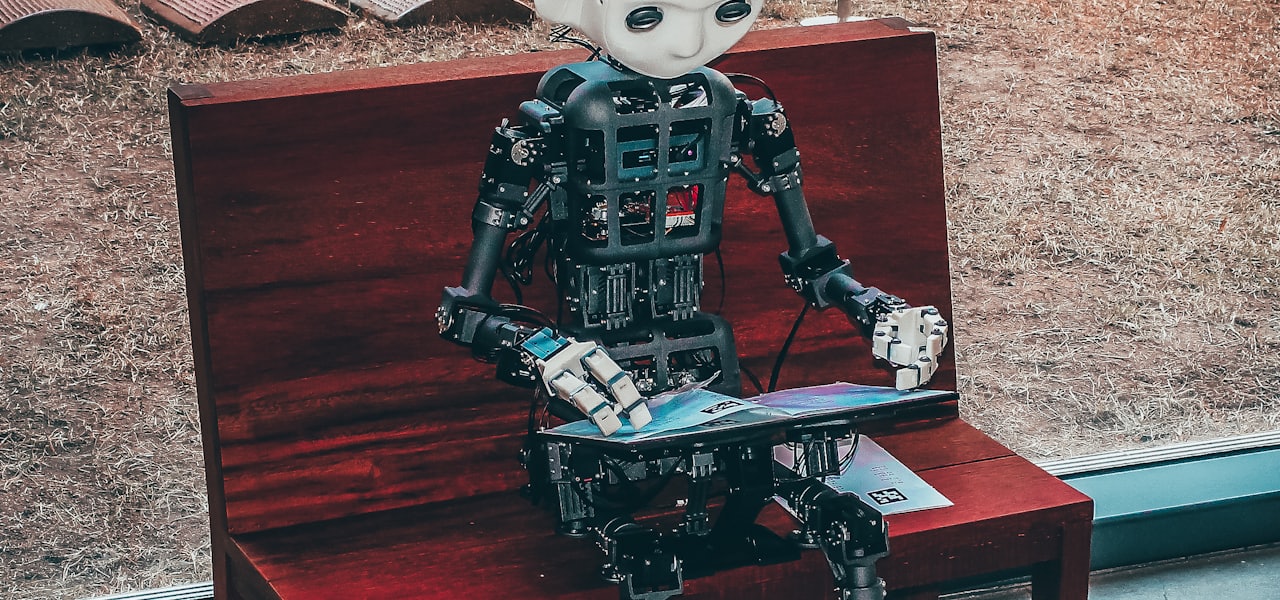
    Anthrobotics is the science of developing and studying robots that are either entirely or in some way human-like. The term anthrobotics was originally coined by Mark Rosheim in a paper entitled "Design of An Omnidirectional Arm" presented at the IEEE International Conference on Robotics and Automation, May 13–18, 1990, pp. 2162–2167. Rosheim says he derived the term from "...Anthropomorphic and Robotics to distinguish the new generation of dexterous robots from its simple industrial robot forebears." The word gained wider recognition as a result of its use in the title of Rosheim's subsequent book Robot Evolution: The Development of Anthrobotics, which focussed on facsimiles of human physical and psychological skills and attributes. However, a wider definition of the term anthrobotics has been proposed, in which the meaning is derived from anthropology rather than anthropomorphic. This usage includes robots that respond to input in a human-like fashion, rather than simply mimicking human actions, thus theoretically being able to respond more flexibly or to adapt to unforeseen circumstances. This expanded definition also encompasses robots that are situated in social environments with the ability to respond to those environments appropriately, such as insect robots, robotic pets, and the like. Anthrobotics is now taught at some universities, encouraging students not only to design and build robots for environments beyond current industrial applications, but also to speculate on the future of robotics that are embedded in the world at large, as mobile phones and computers are today. In 2016 philosopher Luis de Miranda created the Anthrobotics Cluster at the University of Edinburgh "a platform of cross-disciplinary research that seeks to investigate some of the biggest questions that will need to be answered" on the relationship between humans, robots and intelligent systems and "a think tank on the social spread of robotics, and also how automation is part of the definition of what humans have always been". to explore the symbiotic relationship between humans and automated protocols.

    Read more →